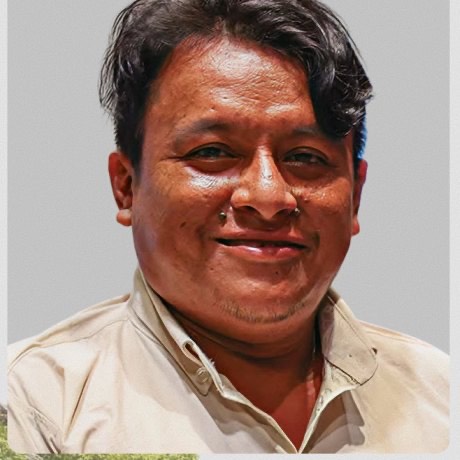
How it started
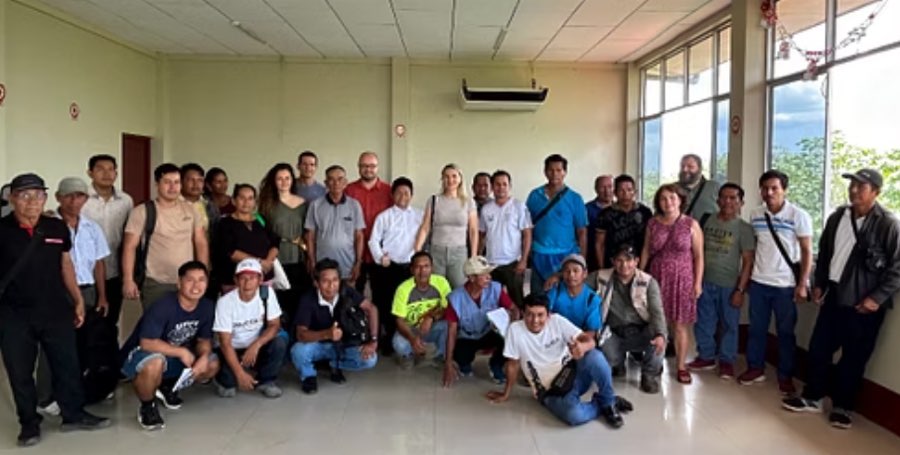
A career in Ukraine's public institutions — a regional council, the Office of the President. Then burnout, and a decision to leave.
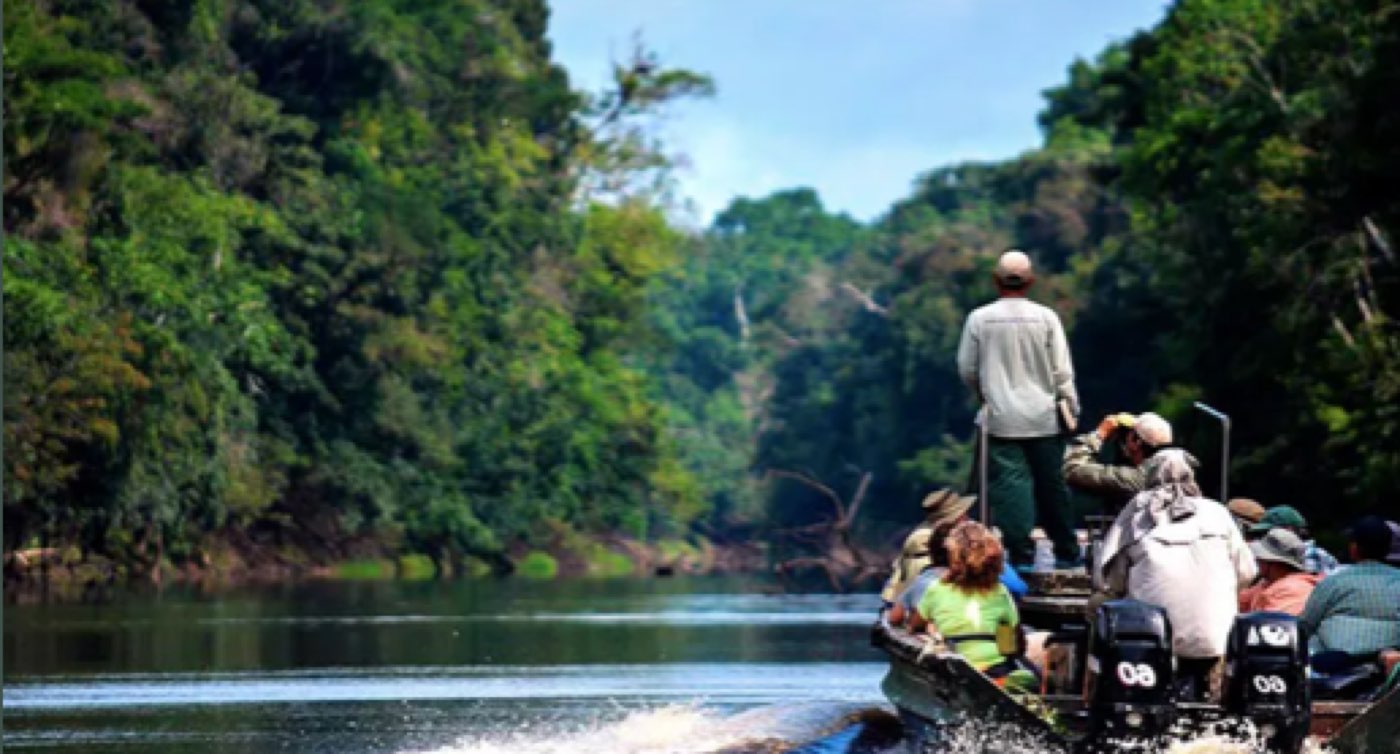
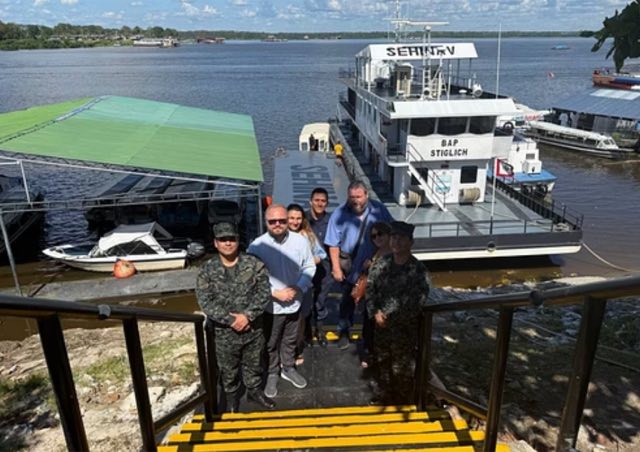
A ship from Barcelona to Brazil. Months in Amazon communities. Then Peru.


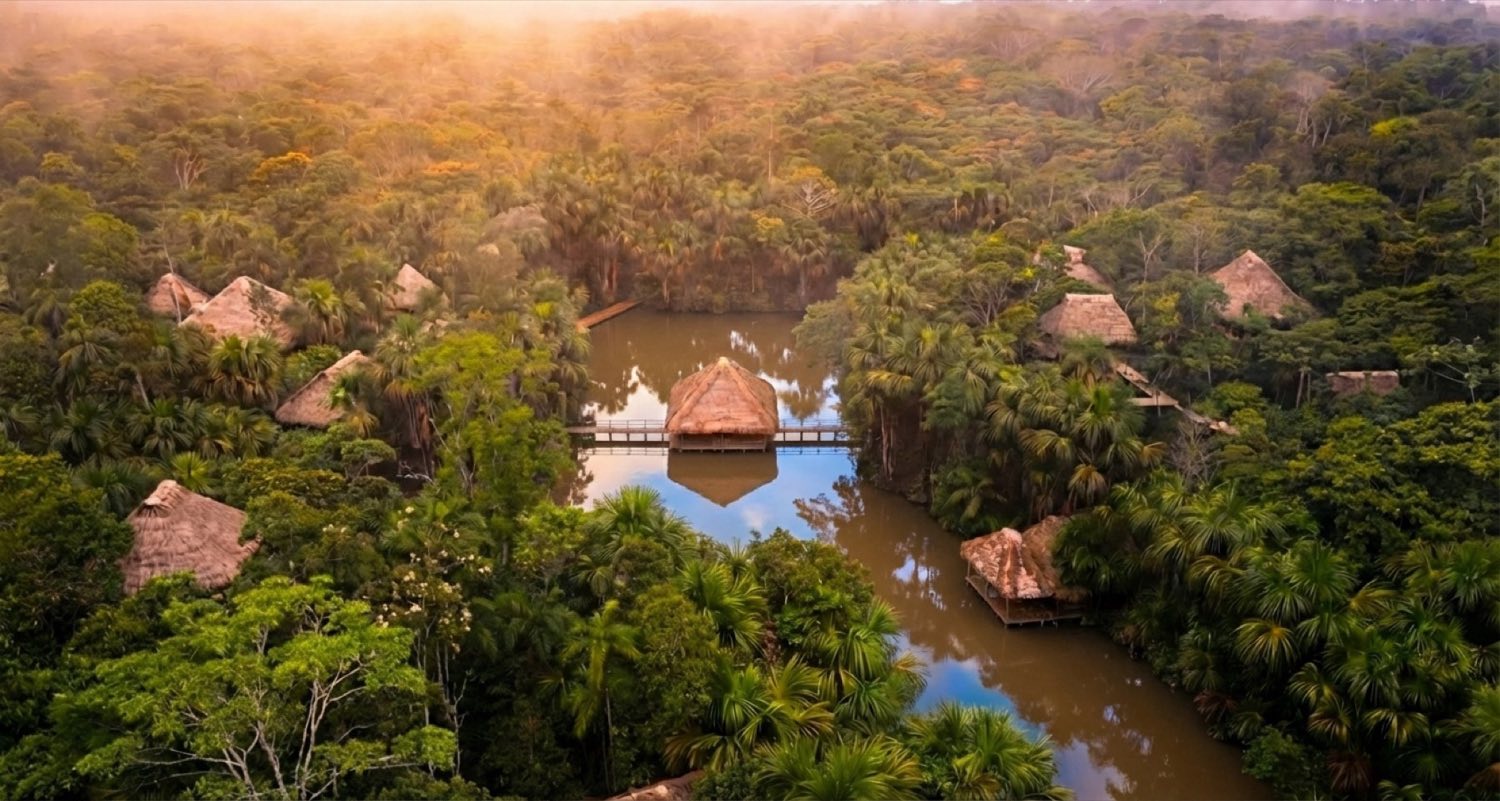
3°45′S 73°15′W — Iquitos, Loreto, Perú · Est. 2020
AWAKEN brings together science, technology and capital to change nature’s place in the economy. We are starting in the Amazon Rainforest.
We work on two levels. The first is status. What can be measured can be financed; what can be financed can be defended. The aim is a forest that appears on a balance sheet, not just in a mission statement.
The second is stranger. By combining sensors, AI models and a digital representation of the forest, we are building a way to ask a living system a question — and receive an answer drawn from its own data.
Until now, every debate about nature has taken place without nature. The next one may not.
How it started
A career in Ukraine's public institutions — a regional council, the Office of the President. Then burnout, and a decision to leave.
A ship from Barcelona to Brazil. Months in Amazon communities. Then Peru.


01 — The case
Extraction converts forest into immediate income — timber, pasture, gold, a road. The value of a living ecosystem is dispersed, deferred and economically invisible. Markets cannot pay for what they cannot measure, so at every point of the Amazon the choice between cutting and keeping is a choice between a concrete sum today and an abstraction tomorrow.
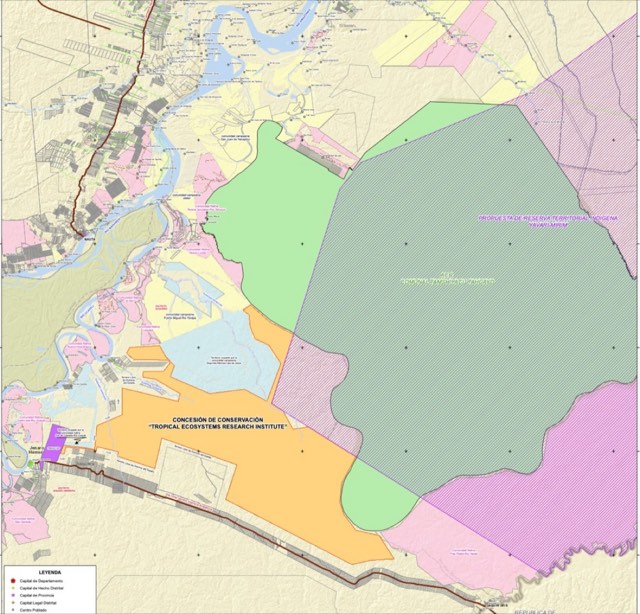
We watch it happen on our own ground: a 97-kilometre road cuts through the landscape of our concession toward the Brazilian border, and every year new clearings appear along it.
AWAKEN gives the living forest an economy of its own: territory held under a conservation regime, measured from within, proven to independent standards, financed — with the money returning to the forest and the people who keep it standing.
02 — What we do, and where it lives
Four directions, one system. Two are what we do: we build the data infrastructure, and an independent institute co-founded by the same team carries the science. Two are places where they live: a 90,179-hectare research territory and a 24-hectare built base, both in Loreto. None of them works alone. The science makes the data defensible; the territories are where instruments and models will be calibrated against the real forest; the base is where communities, researchers and visitors meet the forest all of this protects.
What we do
Where it lives
03 — Operating cycle
Five steps, closed into a loop.
The point of the loop is the return: finance flows back into the territory and the people in it. Each cycle makes the next territory cheaper to protect.
Scroll → to see the full cycle
04 — Scale
| Phase | Area | Basis | Status |
|---|---|---|---|
| P1 | 90,179 ha | Own conservation concession, Loreto | Approved by GOREL Jul 2026 · registration in progress |
| P2 | 420,080 ha | Pilot on Tamshiyacu-Tahuayo regional conservation area | GOREL–TERI memorandum · PLANNED |
| P3 | 2,199,885 ha | Loreto's regional conservation areas — four ACRs | Expansion path in the same memorandum · PLANNED |
| P4 | Basin | Nine Amazon territories — Brazil, Peru, Colombia, Bolivia, Ecuador, Venezuela, Guyana, Suriname, French Guiana | HORIZON |
05 — Record of engagement


| Institution | Form of cooperation | Confirming fact |
|---|---|---|
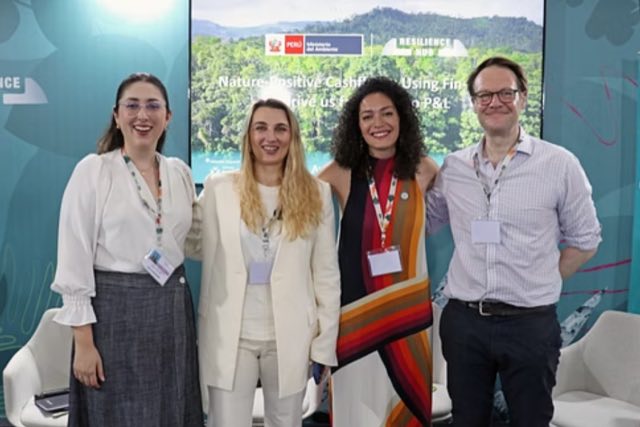
| MINAM — Ministry of Environment of Peru | Joint project presentation | COP30, Belém · Nov 2025 |
| GOREL — Regional Government of Loreto | Memorandum | Pilot on Tamshiyacu-Tahuayo; expansion path 2,199,885 ha |
| SERFOR — National Forest Service | Memorandum of understanding | On file · in the dossier |
| OSINFOR — forest-resources oversight | Memorandum of understanding | On file · in the dossier |
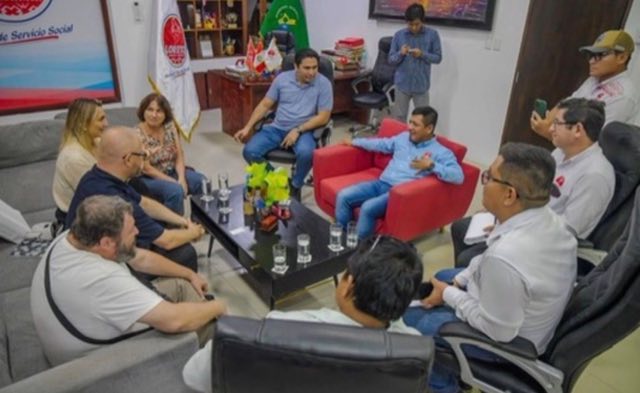
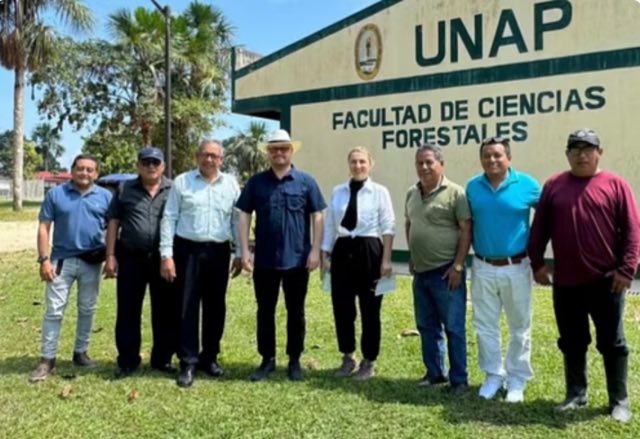
| UNAP — National University of the Peruvian Amazon | Memorandum | Laboratories, field stations, joint research teams |
| IIAP — Research Institute of the Peruvian Amazon | Scientific cooperation | Jenaro Herrera station |
| CCPIP — Chamber of Commerce of Indigenous Peoples | Framework agreement | 10-year term |
| Embassy of Ukraine in Peru | Institutional support | With the Ukrainian-Peruvian Chamber of Commerce |
06 — Founder

You cannot protect, price or finance what you cannot measure. So we built the system that measures the Amazon from inside it.
On the ground in Loreto since 2020: trust built with Peru's institutions, the universities of the Amazon, and the communities beside our territories. What grew out of that work is one system — an independent scientific institute, a data infrastructure, ninety thousand hectares under a conservation regime, and a built base where people meet the forest all of this protects.
Olga Sytnyk
Founder, AWAKEN · Director, TERI · General Director, AWAKEN Management S.A.C.
07 — News & stories
Recent news
Stories
Ukraine's first research base in the tropics — built to an Antarctic standard
Closing the strip between two of Peru's great protected landscapes
A base whose revenue pays for the forest around it
08 — Team


09 — Work with us
01 — CeibaQ · Intelligence & Finance · The first flagship product of AWAKEN
CeibaQ uses direct field data and proprietary AI models to generate high-integrity, quantified ecosystem data — the evidence layer that governments, markets, insurers and scientists rely on to verify, price, account for and model nature.1
01 — How it works
Field measurements are calibrated and extended across the forest by proprietary AI models with quantified uncertainty — a queryable model of ecosystem conditions that can be independently verified by accredited third parties.
One dataset supports carbon, biodiversity, water and resilience-related environmental instruments. Continuously updated, queryable on demand. Measure once — update continuously.
Jurisdictional verification · environmental finance · ecosystem accounting · MRV-aligned data for carbon, biodiversity and water credits · scientific research · a calibration and benchmark layer for environmental AI.2
Governments and jurisdictions · project developers · insurers and reinsurers · development banks and results-based funds · rating agencies · research institutes · environmental-AI developers.
The line we never cross
We do not issue credits. We do not define standards. We supply the evidence layer they rely on.
02 — Why the Amazon
The forest makes its own rain: its flying rivers carry more water than the Amazon river itself, feeding farms and climate far beyond the forest. And it remains among the least-measured places on Earth — science still describes a new Amazonian species roughly every two days.
03 — Sovereign by design
CeibaQ is designed for integration with national forest-monitoring systems, with Free, Prior and Informed Consent from local and Indigenous communities, compliance with the Nagoya Protocol where applicable, and benefit-sharing by design.
1 — CeibaQ is pre-product: specifications describe design and intended coverage, not delivered scale. No client names are cited until contractual.
2 — Designed for compatibility with TFFF, LEAF, CORSIA, Article 6.2, SEEA-EA, Verra and ART-TREES — compatibility, not endorsement.
02 — TERI · Science · RUC 20615536386 · Iquitos, Loreto
Tropical Ecosystems Research Institute — an independent scientific institute registered in Peru and co-applicant of the 90,179-hectare conservation concession. Its president directs Ukraine's National Antarctic Scientific Center — the institution that has kept the Akademik Vernadsky station running since 1996.
01 — Research program
A proving ground for new instruments: a three-tier ground network — acoustic, microclimate and soil nodes; camera-and-dendrometer hubs; reference stations measuring over 1,500 parameters — plus drone LiDAR, terrestrial laser scanning and satellite analysis. Sound alone yields two products: species counts for biodiversity, and chainsaw-, gunshot- and fire-recognition for alerts. One-hectare permanent plots are measured twice — classical forestry and laser — as the standard everything else is checked against.
Species inventories plus the DNA barcodes and training-image sets most Amazonian species still lack — without them, no AI can work with living nature. Built on IIAP's laboratory and UNAP's database of Amazonian plants.
River and floodplain surveys following the Joint Danube Survey methodology — Europe's largest river-research program, whose Ukrainian component was led by TERI's secretary. eDNA — one water sample reveals hundreds of species upstream — chemistry, microplastics, antibiotic resistance.
All streams converge into one continuously updated 3D model of the territory: structure, biomass, hydrology, living cover. No comparable protected area of the Peruvian Amazon has one. Protocols are designed for open publication and annual natural-capital reporting.
02 — People
Antarctic discipline, Amazonian mission.
The institution behind TERI's presidency has kept a research station running at the end of the world since 1996. The Amazon station is built to the same standard.
| Name | Role | Institutional fact |
|---|---|---|
| Evgen Dykyi | President | Director of Ukraine's National Antarctic Scientific Center — operator of the Akademik Vernadsky station since 1996 |
| Olga Sytnyk | Director & legal representative | Founder of AWAKEN · General Director, AWAKEN Management S.A.C. · based in Iquitos |
| Fredy Francisco Ramírez Arévalo | Vice-President | Professor, National University of the Peruvian Amazon (UNAP) · author of the Amazonian plants database |
| Olena Marushevska | Secretary | Led the Ukrainian component of the Joint Danube Survey — Europe's largest river research program |
03 — Institutional base
| Institution | Form of cooperation |
|---|---|
| UNAP — Faculty of Forest Sciences | Memorandum: laboratories, field stations, research teams |
| IIAP — Jenaro Herrera station | Scientific cooperation |
| GOREL — Regional Government of Loreto | Memorandum: pilot on Tamshiyacu-Tahuayo, expansion path 2,199,885 ha |
| MINAM — Ministry of Environment | Joint presentation, COP30 Belém · Nov 2025 |
03 — The Concession · 90,179 ha · Approved Jul 2026 · Registration in progress
A conservation concession held for 40 years under a regime that excludes industrial extraction — the ground truth of the whole AWAKEN system, and the site of its research station and sensor network.
01 — Setting
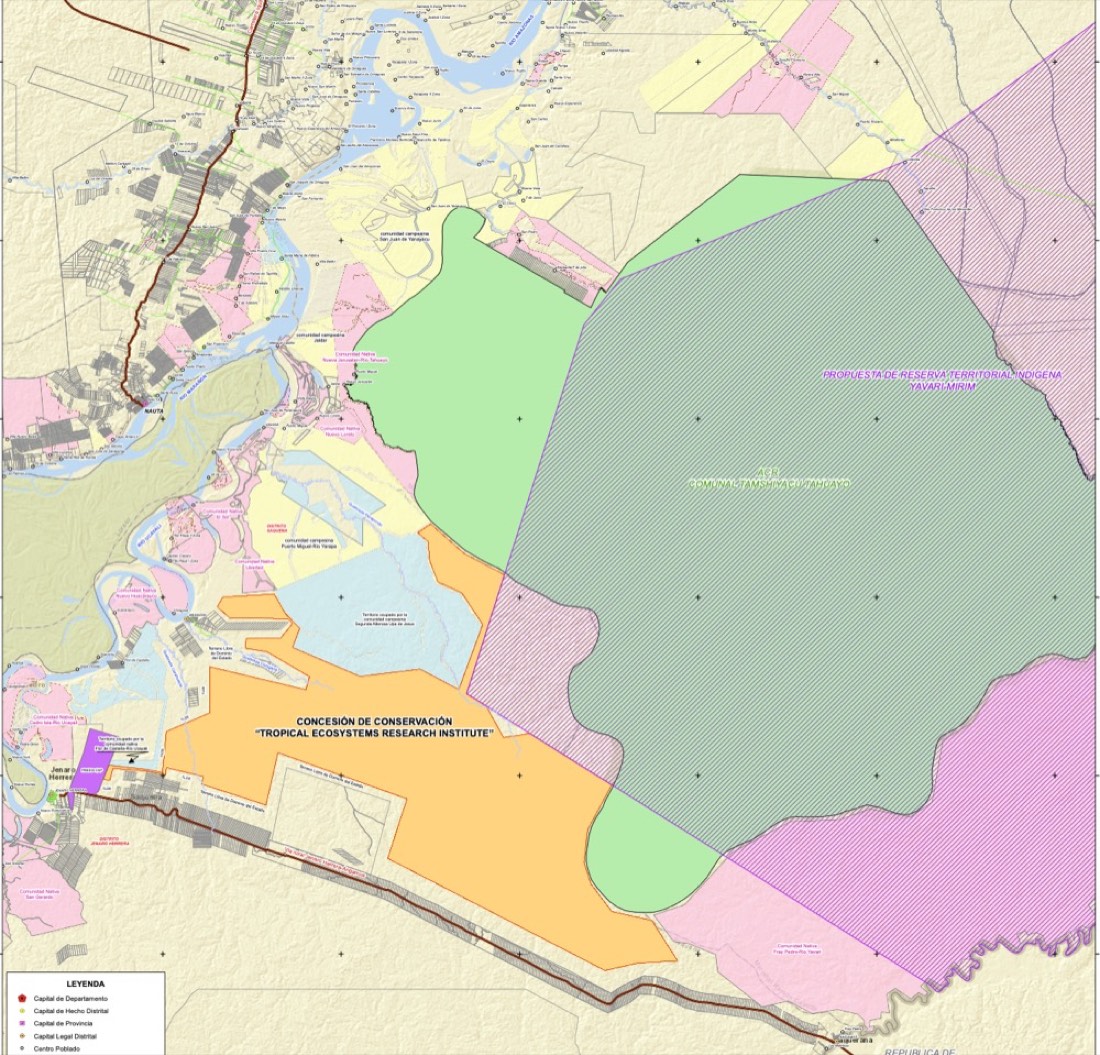
Northeastern Peru, region of Loreto — 35 million hectares of rainforest, over half of all Amazon forest in the country. The concession lies in the provinces of Requena and Mariscal Ramón Castilla, near the confluence of the Marañón and the Ucayali, where the Amazon river itself begins.
The territory fills the strip between the Pacaya-Samiria National Reserve and the Tamshiyacu-Tahuayo communal conservation area, to which it directly adjoins — together, a managed landscape of roughly 510,000 hectares. To the east, the block reaches the Yavarí basin and the Brazilian border; nearby lies the proposed Yavarí-Tapiche reserve, home to peoples living in voluntary isolation, which the system is designed never to touch.
| Area | 90,179 ha — one continuous block |
| Term | 40 years · concesión para conservación |
| Applicants | AWAKEN Management S.A.C. — 43,343 ha · TERI — 46,835 ha |
| Forest | Lowland rainforest 73.8% · high terrace 18.3% · aguajal palm swamps 5.2% · low terrace 2.6% — TERI block 99.99% intact |
| Landscape | Completes ~510,000 ha with Pacaya-Samiria and Tamshiyacu-Tahuayo |
Filed 23 Mar 2026 · Approved by GOREL 6 Jul 2026 · Registration in progress
02 — What lives here
Confirmed present: jaguar, giant otter, Amazonian tapir, giant armadillo, giant anteater, anaconda, black caiman. Species names are documented in the concession application file; Cacajao calvus ucayalii is listed as vulnerable by the IUCN.
Species counts from the concession application file (GOREL, 2026), compiled from published surveys of the Yavarí–Ucayali interfluve. Full references in the dossier.
03 — The threat
The 97-kilometre Jenaro Herrera — Colonia Angamos road cuts through this landscape toward the Brazilian border. It opened the forest's interior: every year, new clearings appear along it — forest cut and burned plot by plot, spreading from the existing settlements. Quarrying and artisanal brickmaking have already been recorded on the fragile white-sand forests. The strip of unprotected forest between the clearings and the protected areas grows narrower every year.
What the concession changes
It closes that strip — and puts a research station, a sensor network and a 40-year legal regime inside it.
04 — AWAKEN Sanctuary · Revenue → Protection · Santa Clara de Ojeal, Loreto
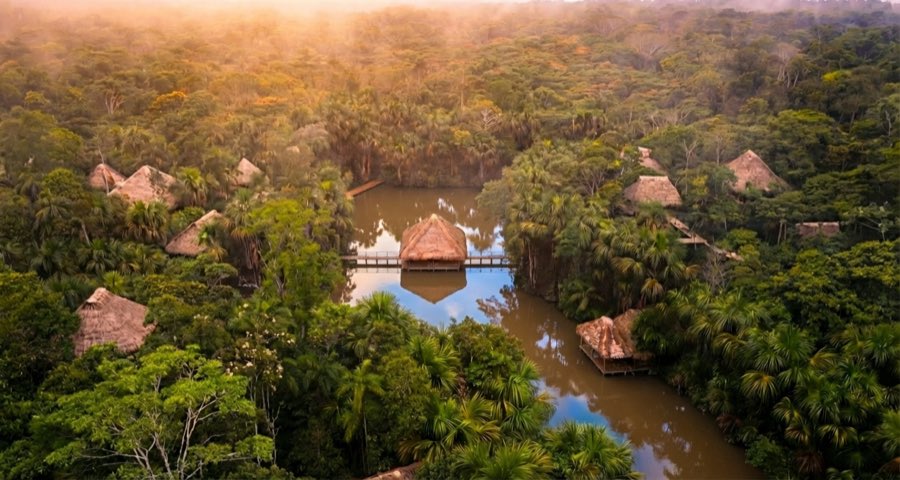
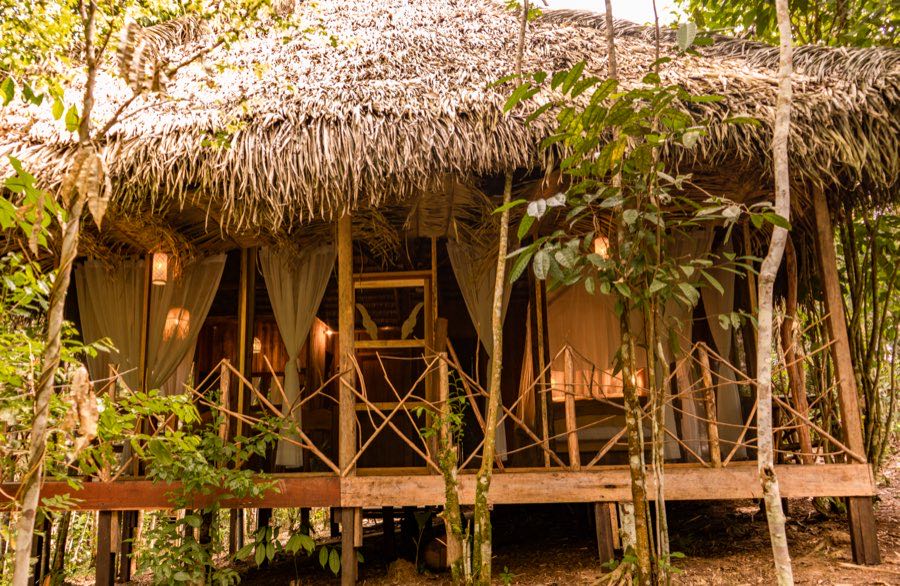
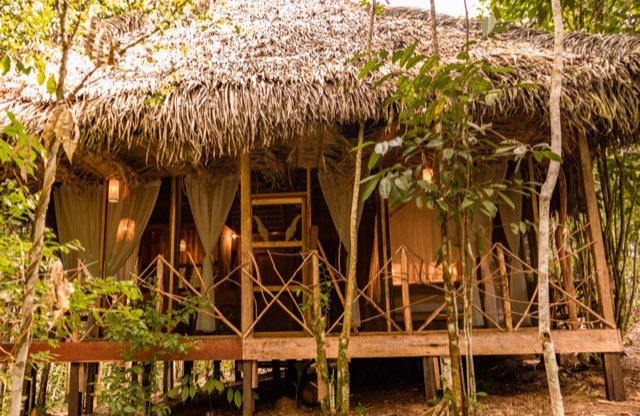
A built base on the Amazon river system, 15 km from Iquitos. Hosting people in the forest generates the revenue that funds conservation and science on the ground — operated together with four neighbouring communities under a cooperation agreement running since 2020.
01 — The mechanism
Revenue stays on the ground.
Hosting people in the forest pays for protecting it — employment, benefit-sharing and science, with the communities of Santa Clara and Barrio Florido.
People come to the forest — small groups, retreats, expeditions, research stays. What they pay funds the conservation of the territory and the science conducted on it: employment, benefit-sharing and participation for the communities of Santa Clara Zona 1, 2, 3 and Barrio Florido.
The landscape grows with the mechanism: from 24 hectares toward a protected landscape of more than 52,000 — roughly 2,000 hectares of community land as a private conservation area (ACP), and a ~50,000-hectare ecotourism concession as an ecological corridor on adjacent public forest.1
Demand validated: 96+ guests from 15 countries · In restart after the 2024 climate events
02 — Infrastructure
Solar power with backup generation. Water treatment and filtration with 2.5 hectares of reservoirs. Starlink connectivity. A 220 m² restaurant, a 180 m² yoga hall, a 200 m² gathering hall, staff housing, a tree platform and a private helipad, inside a guarded perimeter with three security gates.
Land purchased directly from the families who held it and titled with SUNARP; materials sourced locally. Ecological baseline studies with UNAP and IIAP form the foundation for the ACP designation. Under Ley 27037, operations in Loreto carry a reduced income-tax regime through 2048.
1 — The 52,000+ ha protected landscape is the planned horizon of this mechanism (ACP designation and SERFOR ecotourism concession), distinct from the 90,179-ha conservation concession described on its own page.
05 — News & record
Institutional agreements, field programs and public presentations — dated as they happened.
Documentation for each entry — memoranda, photographs, approval files — is available in the dossier on request.